
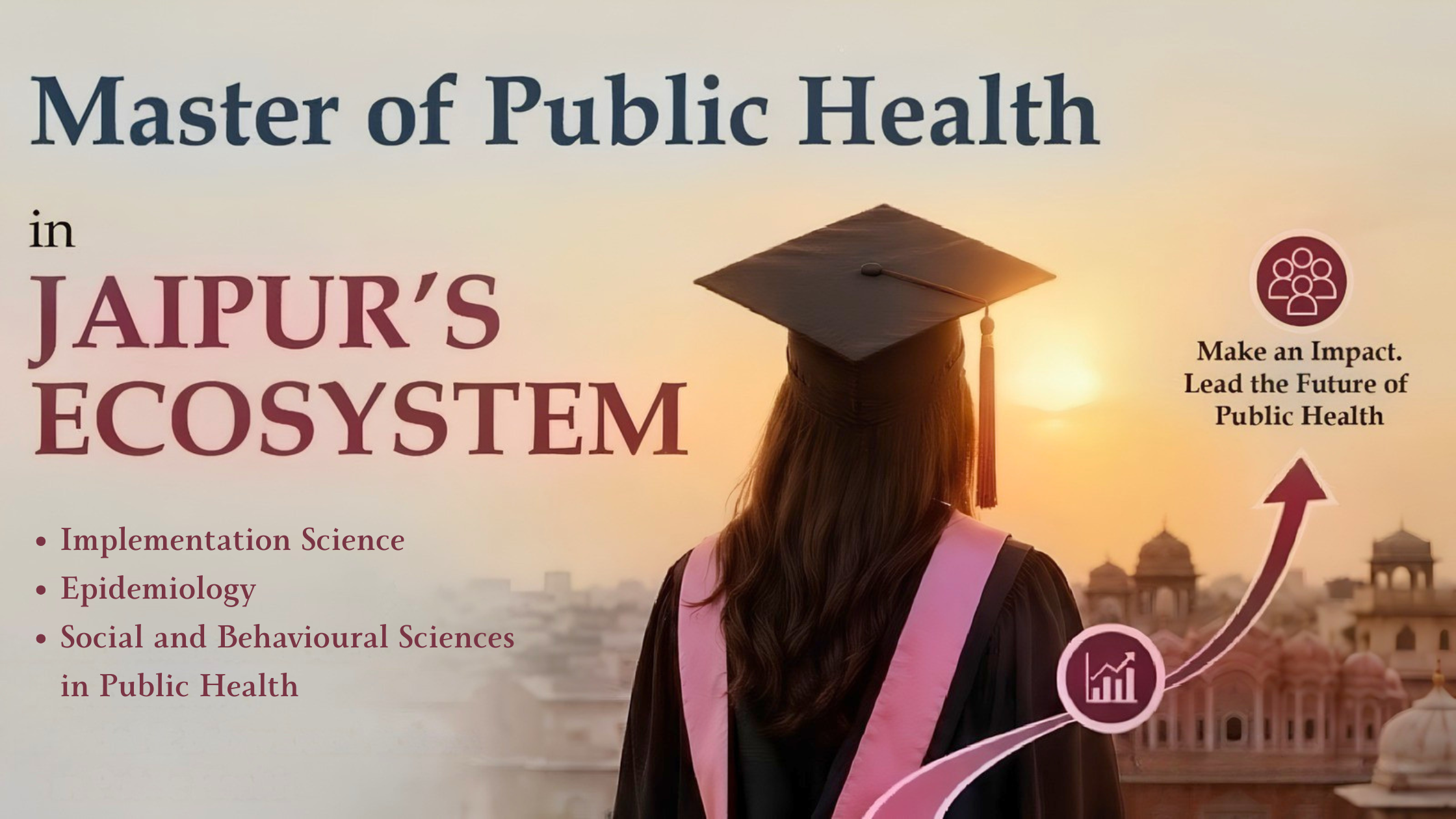
Master of Public Health (MPH) in India: A Complete Guide
Public health has emerged as one of the most important pillars of modern society, especially after the COVID-19 pandemic exposed the urgent need for trained professionals who can manage disease outbreaks, strengthen healthcare systems, and shape evidence-based policy. The Master of Public Health (MPH) is the flagship qualification for anyone aspiring to lead in this space. This complete guide covers everything you need to know about the MPH course in India, from eligibility and admission to top MPH colleges, fees, and the expanding range of career opportunities at home and abroad.
What is a Master of Public Health (MPH)?
The Master of Public Health — or MPH, as most people call it — is a postgraduate public health degree that trains you to improve health at a population level. Instead of treating one patient at a time, you learn to study why whole communities fall ill, what interventions actually work, and how to run the programmes that deliver them. The curriculum pulls from several disciplines: epidemiology, biostatistics, health policy, environmental health, health management, and the social and behavioural sciences.
Why does any of this matter? Because the biggest health challenges we face today don’t respond to clinical care alone. Think about rising diabetes and heart disease, air pollution in our cities, mental health in teenagers, or how quickly a novel virus can cross borders. These are population-level problems, and they need population-level thinking. Governments, hospitals, NGOs, and bodies like WHO and UNICEF are all hiring MPH-qualified professionals to work on them.
So how is MPH different from a clinical medical degree? A doctor with an MBBS or MD is trained to diagnose and treat the person in front of them. An MPH course trains you to ask a different question: why are so many people getting sick in the first place, and what can we change upstream? Clinicians save individual lives; MPH graduates design the systems that keep populations healthier to begin with. Both matter — they’re just different jobs.
Why Study MPH in India?
India is in an unusual moment. The country is racing to build health infrastructure for 1.4 billion people while simultaneously dealing with a double burden of infectious and lifestyle diseases. That combination makes MPH in India one of the most practically relevant degrees you can pursue right now.
- Demand that isn’t going away: Ayushman Bharat, the National Health Mission, ICMR expansions, and state-level health missions all need trained public health professionals — and the talent pipeline is nowhere near catching up.
- Where graduates actually end up: hospitals, NGOs, district and state health departments, think tanks, research institutes, and global bodies like WHO, UNICEF, and the Gates Foundation. The sector variety is genuinely unusual.
- Post-COVID reality check: the pandemic didn’t just create demand, it reshaped it. Roles around disease surveillance, data systems, and preventive health are growing the fastest, and awareness of public health as a career has never been higher.
- Cost and access: a public health degree in India delivers world-class training at a fraction of what you’d spend abroad, and several programmes now bake in international modules or collaborations.
MPH Course Overview
Most MPH courses in India run for two years full-time, split across four semesters. The first year usually builds your foundation; the second pushes you into specialisation, fieldwork, and a capstone. It’s a demanding programme, but the structure is deliberately practical rather than purely academic.
The core subjects you’ll typically encounter:
- Epidemiology and biostatistics
- Health systems, policy, and management
- Environmental and occupational health
- Social and behavioural sciences in health
- Global health and health economics
- Research methods and programme evaluation
- Leadership, ethics, and strategic management
What really distinguishes an MPH from a lecture-heavy master’s is the fieldwork. Every good programme places students with government agencies, NGOs, or hospitals for hands-on practicums, followed by a capstone project that has to solve an actual public health problem — not a textbook one. By the time you graduate, you’ve usually touched real datasets, real communities, and at least one messy implementation challenge. That’s what makes MPH graduates employable from day one.
MPH Eligibility Criteria
One of the nicer things about MPH eligibility is that it isn’t narrow. The field genuinely benefits from having clinicians, statisticians, sociologists, and development-sector people in the same classroom — so admissions criteria are designed to let that mix happen.
- Educational qualification: a bachelor’s degree of at least three years from a recognised university, usually with 50% or higher in aggregate.
- Backgrounds that typically apply: MBBS, BDS, BAMS, BHMS, BPT, B.Sc. Nursing, B.Sc. in life sciences (biotech, microbiology, nutrition, statistics), BPharm, plus degrees in social sciences, economics, or sociology. Many institutes now also admit engineering and management graduates.
- Entrance route: some colleges run their own written test followed by GD and personal interview; others accept CUET-PG scores; a few offer direct admission based on academics and prior experience.
If you’ve already spent a few years working in healthcare, development, or research, that usually counts in your favour during admissions — several institutes weigh work experience quite heavily.
MPH Admission Process
Specifics vary a bit from institute to institute, but the typical MPH admission flow in India looks like this:
- Apply online: fill out the form on the institute’s website and pay the application fee. Most windows open between December and April.
- Sit the test (if required): either an institute-specific written exam or a valid CUET-PG score, depending on where you’re applying.
- GD and personal interview: this is where admissions panels get a feel for your motivation, awareness of public health issues, and ability to communicate — don’t underestimate this stage.
- Final offer: you’re ranked on a composite score that blends academics, entrance performance, and work experience.
Keep your paperwork ready: class 10 and 12 mark sheets, graduation degree and transcripts, a valid ID, passport-size photos, a statement of purpose, recommendation letters, and work experience certificates if you have any. Missing one document late in the cycle is the single most avoidable reason applications fall through.
Top MPH Colleges in India
Picking the right institute probably matters more than picking the MPH itself. Among the top MPH colleges in India, and the public health colleges in India worth a serious look:
- IIHMR University, Jaipur — especially known for its MPH delivered in collaboration with the Johns Hopkins Bloomberg School of Public Health.
- All India Institute of Medical Sciences (AIIMS), New Delhi
- Tata Institute of Social Sciences (TISS), Mumbai
- Public Health Foundation of India (PHFI) — Indian Institutes of Public Health
- Manipal Academy of Higher Education (MAHE), Manipal
- Symbiosis Institute of Health Sciences, Pune
- Sree Chitra Tirunal Institute for Medical Sciences and Technology, Thiruvananthapuram
- Achutha Menon Centre for Health Science Studies
Rankings are a starting point, not a deciding factor. When you’re shortlisting the best MPH colleges in India, dig deeper: Who teaches? What’s the research output? Where do alumni actually work? Are the practicums genuine placements or box-ticking exercises? Is there real international exposure, or just a week-long visit labelled as one? A strong MPH programme shows in its network and fieldwork long after you’ve graduated.
If you’re looking further afield and aiming for the best MPH colleges in world rankings, the MPH-JHU option at IIHMR University — co-delivered with Johns Hopkins Bloomberg School of Public Health — is genuinely worth considering.
At IIHMR, the JHU MPH option is widely regarded as the world’s No. 1 MPH degree.
MPH Fees in India
There’s no single answer to what the MPH fees in India look like — it depends a lot on the type of institute and whether there’s an international tie-up:
- Government institutes: usually INR 50,000 to INR 3 lakh for the full two-year programme.
- Private universities: typically INR 3 lakh to INR 10 lakh for the course.
- Premium programmes with global collaborations: anywhere from INR 12 lakh to INR 25 lakh or more, especially those with international modules, dual credentialing, or on-site components abroad.
Most credible institutes offer merit scholarships, need-based aid, and tie-ups with banks for education loans. Some also have research assistantships that partially offset fees. One practical tip: don’t rely on secondary listings for fee information — check the institute’s own website before you apply, since structures change year on year.
Career Scope After MPH
The scope of MPH in India has quietly expanded a lot over the last decade. Healthcare spending is rising, health-tech has gone mainstream, and the government is pushing hard towards universal health coverage — all of which means more roles for people who understand systems, data, and delivery.
Typical employers include:
- Government ministries and agencies — MoHFW, NHM, ICMR, NITI Aayog, state health departments
- Hospitals and healthcare chains, particularly in community health and quality improvement roles
- Research institutes and academic centres
- National and international NGOs
- Global health bodies — WHO, UNICEF, USAID, Gates Foundation, Gavi
- Corporate CSR teams and workplace wellness divisions
- Health-tech firms, insurance companies, and consulting practices
If you’re thinking about where the growth is strongest, it’s health policy, applied epidemiology, healthcare management, health informatics, and monitoring and evaluation. These are the areas where public health jobs are multiplying faster than trained professionals can fill them.
Jobs After MPH in India
The menu of jobs after MPH in India is wider than most candidates realise. A few of the most common — and most rewarding — roles:
- Public Health Officer: planning and running health programmes at district, state, or national level.
- Epidemiologist: chasing down disease patterns, outbreaks, and risk factors to guide prevention.
- Health Programme Manager: leading large projects for NGOs, governments, or global agencies — budgets, teams, the lot.
- Research Associate or Scientist: applied health research at universities, ICMR centres, or think tanks.
- Monitoring and Evaluation (M&E) Specialist: measuring whether interventions actually work — an area that’s in serious demand right now.
- Health Policy Analyst: advising governments and organisations on evidence-based policy design.
- NGO Programme Lead: running community health, nutrition, maternal and child health, or WASH programmes.
- Hospital and Healthcare Consultant: helping hospitals improve quality, efficiency, and patient outcomes.
Salary-wise, entry-level roles for MPH graduates generally start between INR 4–8 lakh per annum. Senior positions in global health and consulting routinely cross INR 20–30 lakh, and the ceiling keeps rising as you add specialisation and years.
Skills You Gain in an MPH Program
An MPH builds a distinctive skill set — part technical, part managerial, part diplomatic. By graduation, you should be comfortable with:
- Data analysis in SPSS, R, or STATA — and knowing which one to reach for
- Community health assessment and intervention design
- Leadership, stakeholder management, and cross-sector communication
- Research design, programme evaluation, and impact measurement
- Policy analysis and evidence-informed decision-making
- Grant writing, budgeting, and project management
- Ethical reasoning and cultural competence in diverse field settings
These aren’t just public health skills. They travel well — into insurance, pharma, ed-tech, development finance, and any sector where human wellbeing is a core metric.
MPH vs Other Healthcare Degrees
A question that comes up constantly: how does an MPH stack up against other health-related postgrad options? A quick honest take on each:
MPH vs MBA in Healthcare: an MBA in healthcare is about running hospitals and healthcare businesses — operations, finance, strategy. An MPH is wider, covering population health, epidemiology, policy, and prevention alongside management. Rule of thumb: pick the MBA if you want to run a hospital group or health-tech startup; pick the MPH if you want to shape health systems and policy.
MPH vs clinical programmes: clinical programmes train you to treat individual patients. The MPH trains you to prevent disease and fix the systems that let it happen. A lot of doctors add an MPH precisely because they want to move from clinical work into policy, research, or leadership.
MPH vs MSc in Public Health: an MSc tends to be research-first, more academic. The MPH is built for applied practice and leadership — it’s the degree you pick if you want to run things, not just study them.
So who should actually choose an MPH? Doctors, nurses, and allied health professionals looking for wider impact. Life-science graduates are drawn to data and research. Social science graduates interested in health policy. Development-sector folks who want to specialise in health. If you find yourself more curious about why populations get sick than about any single patient’s case, the MPH is probably the right fit.
Future Scope of MPH
If you’re trying to read the long arc, the future of public health looks busy — both in India and globally. Health has moved from being a social-sector footnote to a strategic priority, and demand for trained professionals is tracking upward steadily.
- In India: primary health infrastructure is expanding, the Ayushman Bharat Digital Mission is reshaping how data flows, the non-communicable disease burden keeps growing, and climate-related health risks are only just starting to get serious attention. All of this spells thousands of new roles.
- Global career after MPH: Indian MPH graduates are landing roles at WHO, UNICEF, the World Bank, Gavi, CDC affiliates, and major international NGOs with increasing frequency. The degree is also a strong launchpad for PhD programmes and policy fellowships abroad.
- Data and tech: AI in healthcare, genomic surveillance, and real-time disease tracking are creating a whole new category of roles. MPH graduates with coding or data skills are especially in demand.
- Preventive healthcare: the quiet shift from treating illness to preventing it — through lifestyle interventions, screening, and vaccination — puts MPH graduates right at the centre of what healthcare is becoming.
Whether your ambition is a government career, an NGO leadership role, a research path, or a global career after MPH with a UN agency, this degree opens an unusually wide set of doors.
Conclusion
The Master of Public Health isn’t just another academic credential — it’s a pathway into the work of actually changing how societies live, work, and stay well. India’s healthcare sector is being rebuilt in real time, and global public health is only getting more complex, so the people who can think analytically, manage programmes, and lead through ambiguity are going to stay in short supply.
Between flexible eligibility routes, the depth of public health colleges in India, and the growing universe of public health jobs worldwide, the MPH points in one clear direction: opportunity. Whether you want to design national health programmes, lead community interventions, dig into disease patterns, or build an international health career, this is one of the few degrees that genuinely travels well across sectors and borders.
FAQ’s On MPH
How long is an MPH course in India, and can I do it part-time?
Most MPH programmes run for two years full-time across four semesters. A few institutes offer part-time or executive variants for working professionals, usually stretched over two to three years — though full-time formats generally deliver stronger fieldwork and placement outcomes.
Is an MPH worth it in India?
Yes, especially if you study at a reputed institute. Entry-level roles start at INR 4–8 lakh per annum and senior positions cross INR 20–30 lakh within 5–8 years — but the bigger return is career optionality across government, NGOs, research, corporate health, and global agencies.
Can I pursue an MPH without a medical background?
Absolutely. Most programmes admit candidates from life sciences, statistics, sociology, economics, nursing, pharmacy, and even engineering or management. What matters more than your undergraduate subject is genuine interest in health systems, community work, or data.
What’s the difference between MPH and MHA?
An MHA trains you to run a hospital — operations, staffing, finance. An MPH trains you to improve health at a population level through policy, epidemiology, and programme design. Pick MHA if you want to lead healthcare institutions; pick MPH if you want to shape health systems.
Do MPH graduates from India get jobs abroad?
Yes, regularly. Alumni work at WHO, UNICEF, the World Bank, Gavi, and major international NGOs. Graduates from programmes with global collaborations — like the IIHMR–JHU MPH — tend to have the smoothest international transitions.
What entrance exams are accepted for MPH admissions?
There’s no single national exam. Most institutes run their own written test plus GD and interview, some accept CUET-PG, and a few offer direct admission based on academics and work experience. Application windows typically open between December and April.
Explore the best MPH programs and build a career that shapes healthier communities.
Abbreviations:
- WHO – World Health Organization
- UNICEF – United Nations International Children’s Emergency Fund
- ICMR- Indian Council of Medical Research
- MBBS – Bachelor of Medicine and Bachelor of Surgery
- BDS – Bachelor of Dental Surgery
- BAMS – Bachelor of Ayurvedic Medicine and Surgery
- BHMS – Bachelor of Homeopathic Medicine and Surgery
- BPT – Bachelor of Physiotherapy
- B.Sc – Bachelor of Science
- CUET-PG – Common University Entrance Test – Postgraduate
- MoHFW – Ministry of Health and Family Welfare
- NHM – National Health Mission
- ICMR- Indian Council of Medical Research
- NITI – National Institution for Transforming India
- USAID – United States Agency for International Development
- Gavi – Global Alliance for Vaccines and Immunisation